18 Reassuring Expressions to Comfort Someone in English

Welcome to Hello English! Sometimes, the most powerful thing you can say isn’t advice—it’s comfort. Knowing how to reassure someone in English shows empathy, builds trust, and strengthens relationships.
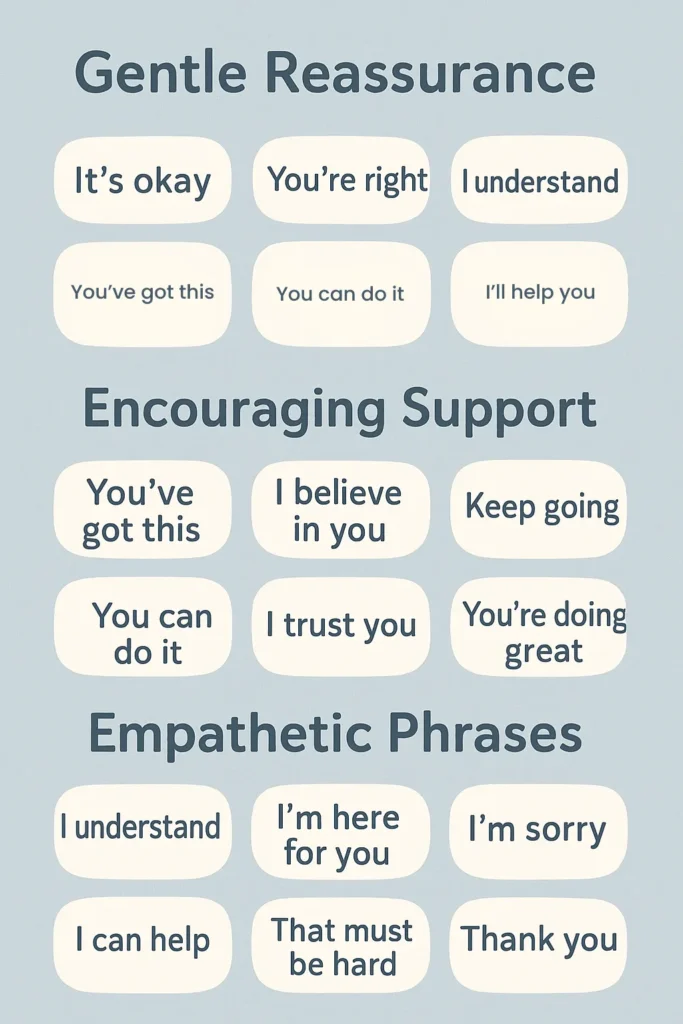
Reassuring Expressions in English

In this lesson, you’ll learn 18 natural reassuring expressions in English—from gentle phrases like “It’s okay” to supportive statements like “You’ve got this.” Use them to comfort friends, family, coworkers, or even yourself.

Gentle Reassurance (Calm & Kind)

  • It’s okay.
  • Don’t worry.
  • Everything will be fine.
  • You’re going to be alright.
  • Take a deep breath.
  • This will pass.

Example:
Friend: “I’m so nervous about my presentation!”
You: “Don’t worry. You’ve prepared well. Everything will be fine.”

Encouraging Support (Build Confidence)

  • You’ve got this!
  • I believe in you.
  • You’re doing great.
  • Keep going—you’re almost there.
  • You’re stronger than you think.
  • This is just a small setback.

Example:
Colleague: “I failed the first part of the test.”
You: “You’re stronger than you think. Keep going—you’ve got this!”

Empathetic Phrases (Show You Care)

  • I’m here for you.
  • You’re not alone.
  • I understand how you feel.
  • That sounds really hard.
  • Take all the time you need.
  • Let me know if you need anything.

Important: Avoid saying “I know exactly how you feel”—it can sound dismissive. Instead, say “I can only imagine how hard this is.”

When to Use These

• A friend is stressed
• Someone makes a mistake
• A loved one is sad or anxious
• A coworker is overwhelmed
• You want to show kindness

Practice Tip

Next time someone shares a problem, try using one phrase from each group. Notice how it changes the conversation!

Now you’re ready to offer real comfort in English—with kindness, empathy, and confidence. Bookmark this guide, or try our interactive quiz to practice these reassuring phrases.

You’ve got this—and so do they. 💙

Similar Posts

  • 10 Ways to Say “Maybe”

    In English, sometimes you’re not ready to say “yes” or “no”—and that’s perfectly okay! Knowing 10 ways to say maybe helps you respond honestly without closing the door or overcommitting. Whether you’re making plans, answering a request, or just buying time, these phrases let you stay flexible and polite. Common Ways to Say “Maybe” Instead of repeating…

  • 10 Ways to Say “See You Later”

    Knowing how to gracefully end a conversation is an important part of English communication. Instead of always using the simple phrase “Goodbye,” there are many friendly, professional, and natural ways to say “See You Later.” This lesson gives you ten perfect expressions to use when parting ways with friends, colleagues, or acquaintances. Common Ways to…

  • 10 Ways to Ask for an Opinion

    When you’re speaking English, asking for someone’s opinion is essential for polite conversation, productive meetings, and sharing ideas. Instead of always saying, “What do you think?” knowing 10 Ways to Ask for an Opinion will help you sound more fluent, natural, and appropriate for any situation, whether you are at work or talking with friends….

  • 10 Ways to Say “I’m Tired”

    In English, it’s very common to talk about how you’re feeling, and often that means admitting you’re exhausted! While saying “I’m tired” is clear, native speakers use many colorful and specific phrases to describe different levels of fatigue. Learning 10 Ways to Say “I’m Tired” will help you sound much more natural and express exactly…

  • 10 Ways to Say “I Don’t Understand”

    Asking for clarification is one of the most important parts of any conversation. If you just say “I don’t understand” every time you get confused, you might sound impolite or frustrated. Knowing 10 Ways to Say “I Don’t Understand” allows you to be specific about your confusion and ask for help politely in different social…

  • 10 Ways to Ask for Help

    Learn 10 ways to ask for help in English—essential for school, work, travel, and everyday life. Whether you’re lost, stuck on a task, or just need a hand, knowing how to ask clearly and politely makes a big difference. In this lesson, you’ll discover 10 practical phrases to ask for help in English, from casual…

Leave a Reply