
Countries and Nationalities in English
Welcome to Hello English! If you’ve ever been asked, “Where are you from?” or needed to talk about someone’s nationality in English, you know how important it is to get it right.
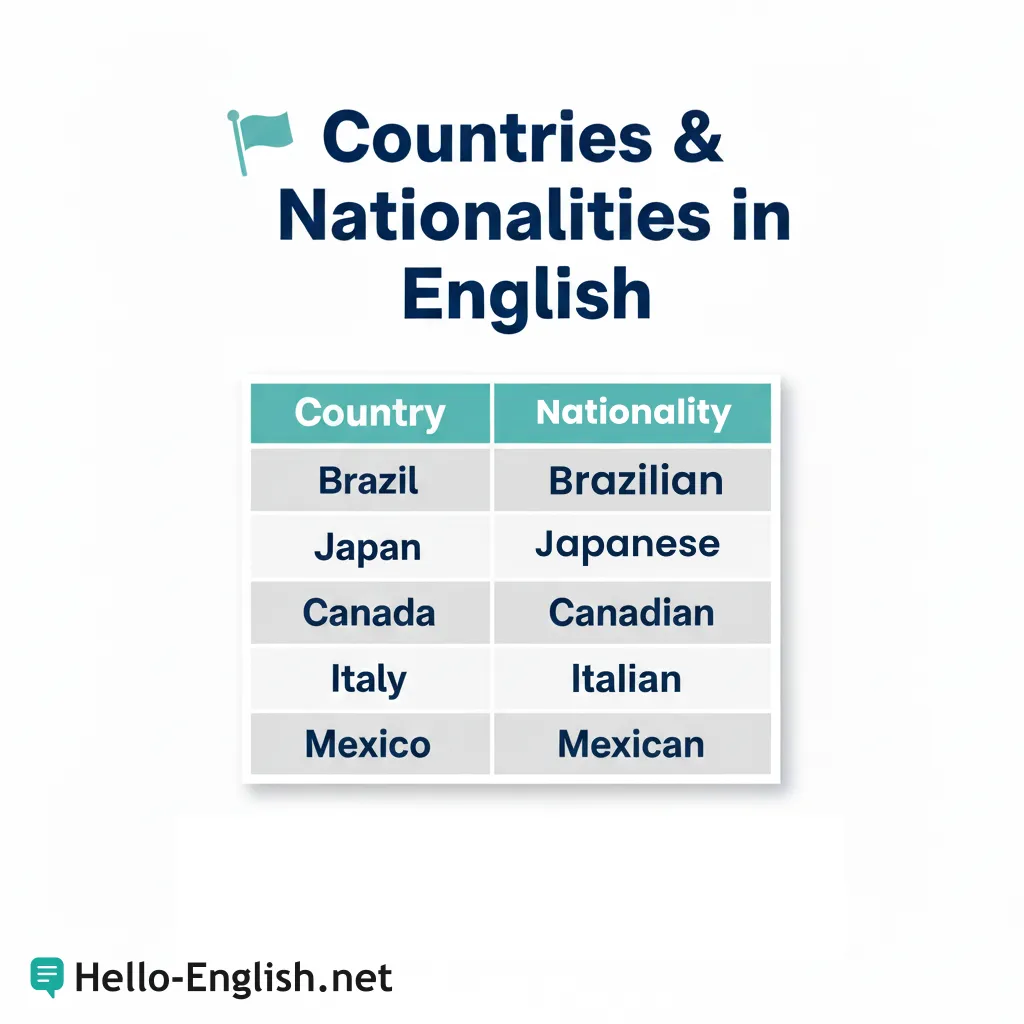
In this lesson, you’ll find a complete list of countries and their correct nationalities in English—from Afghanistan → Afghan to Zimbabwe → Zimbabwean. This guide is perfect for students, job interviews, travel, or everyday conversations.
Countries and Nationalities
| Country | Nationality |
|---|---|
| Afghanistan | Afghan |
| Albania | Albanian |
| Algeria | Algerian |
| Argentina | Argentine / Argentinian |
| Australia | Australian |
| Austria | Austrian |
| Bangladesh | Bangladeshi |
| Belgium | Belgian |
| Brazil | Brazilian |
| Canada | Canadian |
| China | Chinese |
| Colombia | Colombian |
| Egypt | Egyptian |
| France | French |
| Germany | German |
| Greece | Greek |
| India | Indian |
| Indonesia | Indonesian |
| Iran | Iranian |
| Ireland | Irish |
| Italy | Italian |
| Japan | Japanese |
| Mexico | Mexican |
| Netherlands | Dutch |
| Peru | Peruvian |
| Philippines | Filipino |
| Poland | Polish |
| Portugal | Portuguese |
| Russia | Russian |
| South Korea | South Korean |
| Spain | Spanish |
| Switzerland | Swiss |
| Thailand | Thai |
| Turkey | Turkish |
| United Kingdom | British |
| United States | American |
| Vietnam | Vietnamese |
| Zimbabwe | Zimbabwean |
Note
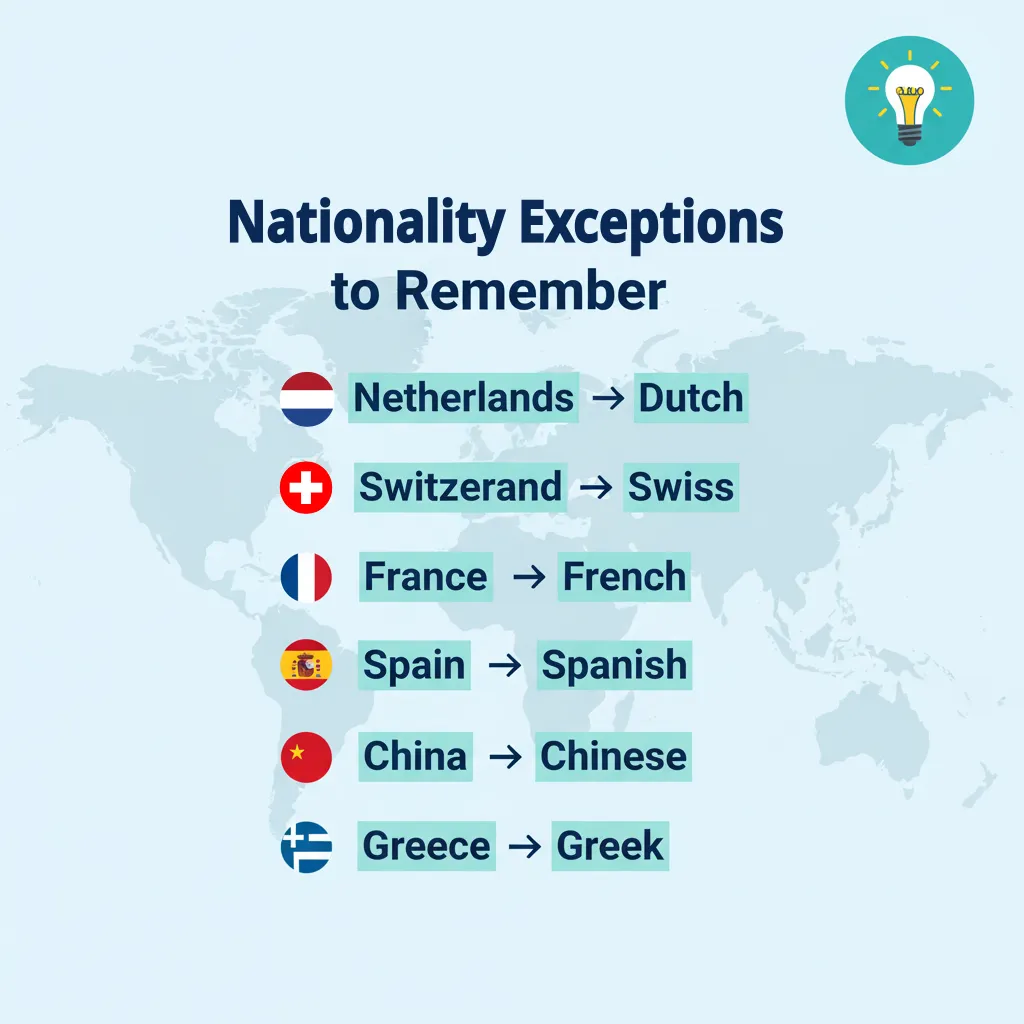
Some nationalities don’t follow a clear pattern (e.g., Netherlands → Dutch, Switzerland → Swiss). These are best memorized as exceptions.
Nationality Exceptions to Remember
How to Use Nationalities in Sentences
- “I’m from Brazil. I’m Brazilian.”
- “She lives in Japan. She’s Japanese.”
- “They’re from the United States. They’re American.”
- “He was born in Greece, so he’s Greek.”
✅ Always capitalize both country names and nationalities in English.
Common Mistakes to Avoid
- “I’m from India, so I’m India.” → ❌ ✅ Correct: “I’m Indian.”
- “She’s from Chinese.” → ❌ ✅ Correct: “She’s from China. She’s Chinese.”
- “Argentinian” vs. “Argentine” → Both are correct! “Argentinian” is more common in everyday speech.
Why This Matters
Whether you’re:
- Introducing yourself in English
- Filling out a form
- Talking about world cultures
- Preparing for TOEFL, IELTS, or a job interview
…knowing the right nationality word makes you sound confident and fluent.
Practice Tip
Try this: “My friend is from ______. He/She is ______.” Fill in 5 countries from the list above!
Now you’re ready to talk about countries and nationalities in English like a pro! Bookmark this page for quick reference—and check out our interactive quiz next to test your knowledge.
Happy learning! 🌎