
10 Ways to Say “You’re Welcome”
You’ve got a fantastic list of ways to reply to “Thank you,” but sometimes a shorter, more focused list is exactly what you need! Whether you’re texting a friend, replying to a customer, or writing a polite email, knowing how to say “You’re welcome” in different ways helps you sound natural, kind, and confident.
Here are 10 of the best and most versatile responses—from everyday casual replies to polished professional phrases. They’re organized from most common to slightly more expressive, so you can choose the perfect one for any situation.
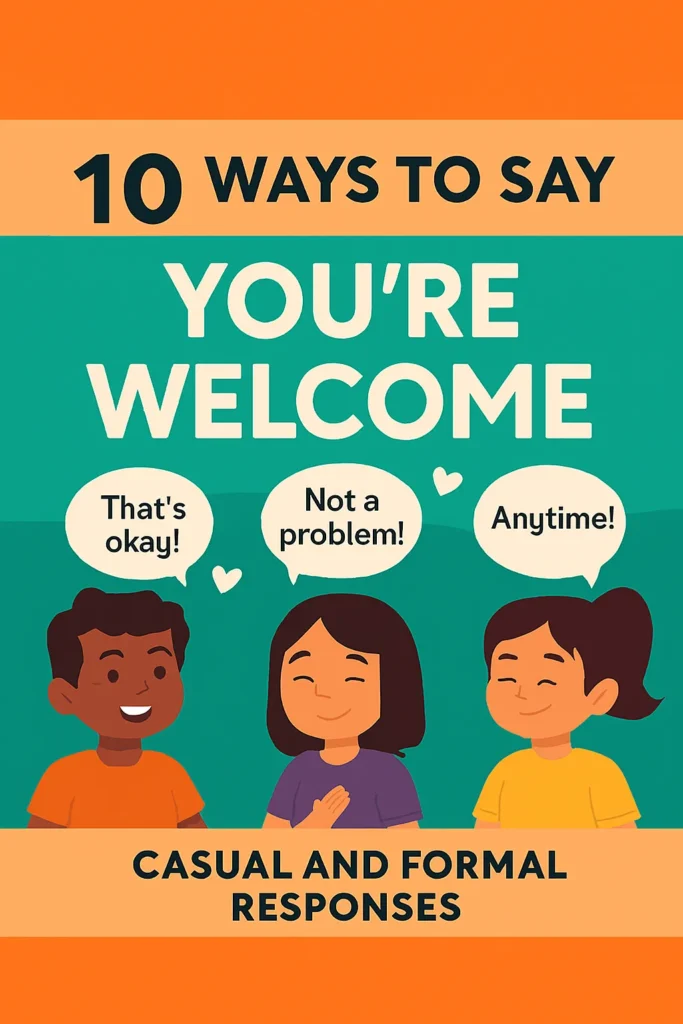
10 Ways to Say “You’re Welcome”
These phrases cover every context—from quick chats with friends to formal business emails. Mastering these responses will make your English sound more fluent and friendly.
1. You’re welcome.
Meaning & When to Use: The standard, safe, and universally polite reply. Works in any context—formal or informal.
Example:
“Thanks for holding the door.” → “You’re welcome!”
2. My pleasure.
Meaning & When to Use: Warm and sincere—shows you truly enjoyed helping. Ideal for hospitality, customer service, or when someone thanks you for something thoughtful.
Example:
“Thank you for the wonderful meal.” → “My pleasure.”
3. No problem.
Meaning & When to Use: Friendly and relaxed. Suggests the favor was easy and caused no trouble. Very common in spoken English.
Example:
“Thanks for the quick response.” → “No problem.”
4. Anytime.
Meaning & When to Use: Casual and generous. Implies you’d happily help again—great with friends, family, or coworkers.
Example:
“Thanks for lending me your notes.” → “Anytime.”
5. No worries.
Meaning & When to Use: Super common in the US, UK, Australia, and beyond. A laid-back way to say “It’s all good!” Perfect for small favors or minor thanks.
Example:
“Sorry I was late. Thanks for waiting.” → “No worries.”
6. Glad to help.
Meaning & When to Use: Simple, humble, and sincere. Shows genuine willingness without overdoing it. Works in both casual and semi-formal settings.
Example:
“Thank you for the advice.” → “Glad to help.”
7. Don’t mention it.
Meaning & When to Use: Polite and modest. Suggests the action wasn’t a big deal—so no thanks are needed. Common among friends or neighbors.
Example:
“Thanks for watering my plants.” → “Don’t mention it.”
8. Of course!
Meaning & When to Use: Warm and natural. Implies helping was the obvious or expected thing to do—especially with people you care about.
Example:
“Thanks for coming with me.” → “Of course!”
9. Happy to be of assistance.
Meaning & When to Use: More formal and professional. Perfect for emails, customer support, or workplace communication.
Example:
“Thank you for looking into my account.” → “Happy to be of assistance.”
10. Sure thing!
Meaning & When to Use: Casual, upbeat, and confident. Often used among friends or in relaxed settings. Adds a touch of enthusiasm.
Example:
“Thanks for grabbing my coffee!” → “Sure thing!”
Quick Tips for Natural Replies
In fast, informal chats, native speakers often shorten these even more:
– “Yep!”
– “All good!”
– “Absolutely!”
Now you can mix up your replies and respond to “Thank you” like a fluent English speaker—whether you’re being polite, humble, or just keeping it cool. Try using one new phrase each day this week. Soon, these ways to say “You’re welcome” will feel completely natural!
Practice Tip
Next time someone says “Thank you,” challenge yourself to use a different “You’re welcome” phrase from this list. Keep track of which ones feel most natural to you!
Mastering these 10 ways to say “You’re welcome” will boost your confidence in everyday conversations and help you connect more warmly with others in English.
Happy learning!