10 Ways to Say “See You Later”
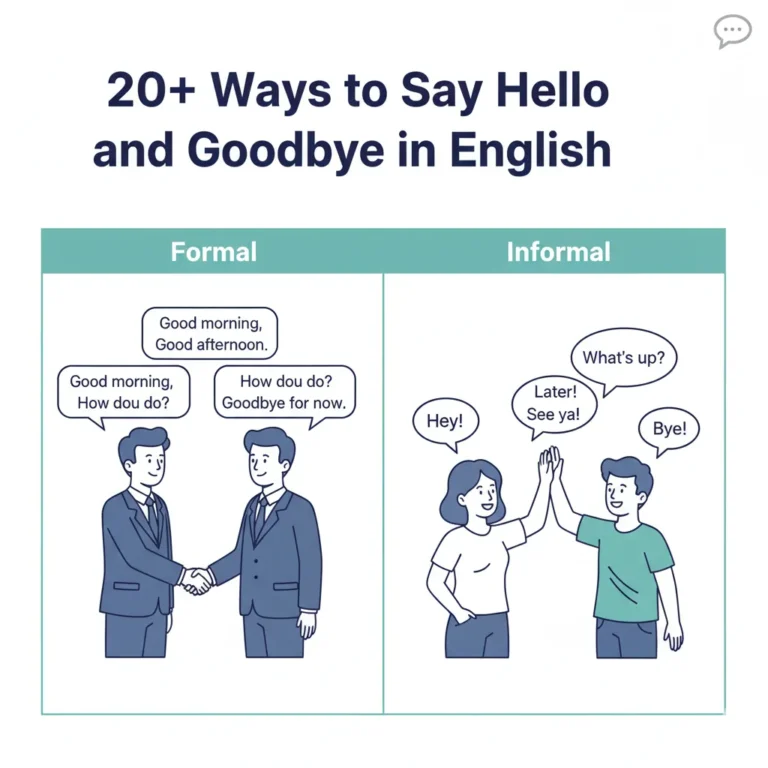
Knowing how to gracefully end a conversation is an important part of English communication. Instead of always using the simple phrase “Goodbye,” there are many friendly, professional, and natural ways to say “See You Later.” This lesson gives you ten perfect expressions to use when parting ways with friends, colleagues, or acquaintances.
Common Ways to Say ‘See You Later’
Casual & Common Goodbyes
- Talk to you later.
Meaning: A very common phrase used when you plan to communicate with the person again soon, either by phone, chat, or in person.
Example: “I need to run, my bus is here. Talk to you later.” - I’ll catch you later.
Meaning: A friendly, slightly casual alternative to “See you later.” “Catch you” means to meet or talk to you again at a later time.
Example: “I’m leaving the gym now. I’ll catch you later.” - Have a good one.
Meaning: A short, simple, and versatile farewell. It means “Have a good day,” “Have a good night,” or “Have a good week.”
Example: “Thanks for the coffee! Have a good one.” - See you around.
Meaning: Used when you know you will see the person again, but you don’t know exactly when or where (e.g., in the office, at school, or in the neighborhood).
Example: “I’m done with class for the day. See you around.” - Bye for now.
Meaning: A friendly and gentle goodbye that clearly implies the separation is temporary. Often used at the end of a video call.
Example: “I have to go start dinner. Bye for now.” - Professional & Polite Goodbyes
- It was nice seeing you.
Meaning: A polite and warm phrase used when leaving a formal or social interaction. You should follow this with a handshake or a nod.
Example: “Thank you for the meeting. It was nice seeing you.” - Looking forward to our next meeting.
Meaning: A professional phrase used when you have a specific, scheduled future meeting or event with the person.
Example: “We covered a lot of ground today. Looking forward to our next meeting.” - Take care.
Meaning: A warm, respectful, and slightly more personal farewell, used when you care about the person’s well-being.
Example: “It was great working on this project with you. Take care.” - Until next time.
Meaning: A concise, friendly, and appropriate phrase when you often see or work with the person.
Example: “That’s all for today’s training session. Until next time.” - I should get going.
Meaning: Used as a transition phrase to signal that you are ready to leave. It’s polite and prepares the other person for your departure.
Example: “It’s getting late, I should get going. See you later!”
Real-Life Dialogues
Friend A: “I’ve got to pick up my kids now, so I need to leave.”
Friend B: “No problem! Talk to you later. Have a good one.”
Client: “That concludes our business discussion for the day.”
Sales Rep: “It was nice seeing you. Looking forward to our next meeting next week.”
Colleague A: “I’m heading out to lunch. I should get going.”
Colleague B: “Okay. I’ll catch you later. Take care.”
Quick Tips: Choosing the Right Phrase
| Situation | Recommended Expression to Say “See You Later” | Why? |
|---|---|---|
| Casual & Quick | Have a good one. or Talk to you later. | Fast, friendly, and very natural for everyday partings. |
| When You Have a Specific Future Meeting | Looking forward to our next meeting. | Professional and confirms the next interaction is scheduled. |
| After a Formal Introduction/Meeting | It was nice seeing you. | Polite, respectful, and expresses appreciation for the time spent together. |
| General, Friendly Parting (High Concern) | Take care. | Conveys warmth and a slightly more personal touch than a simple goodbye. |
Practice Tip
When you say “See You Later” in person, always pair the phrase with non-verbal communication like a genuine smile, a wave, or a handshake. The non-verbal signal makes even a short phrase like “Catch you later” feel warm and sincere.
Why This Matters
- Avoid Repetition: Using different phrases to say “See You Later” makes your English sound more dynamic and less robotic.
- Signal Intent Clearly: Phrases like “I should get going” clearly signal to the other person that the conversation is ending, preventing awkward silences or long farewells.
- End on a Positive Note: Ending a conversation with a warm phrase like “Take care” or “Have a good one” leaves a friendly and positive final impression.
The next time you finish a chat with a friend or colleague, try using one of these new expressions instead of “Goodbye.” Practice using a different phrase each day to expand your vocabulary! Happy learning! 😊