
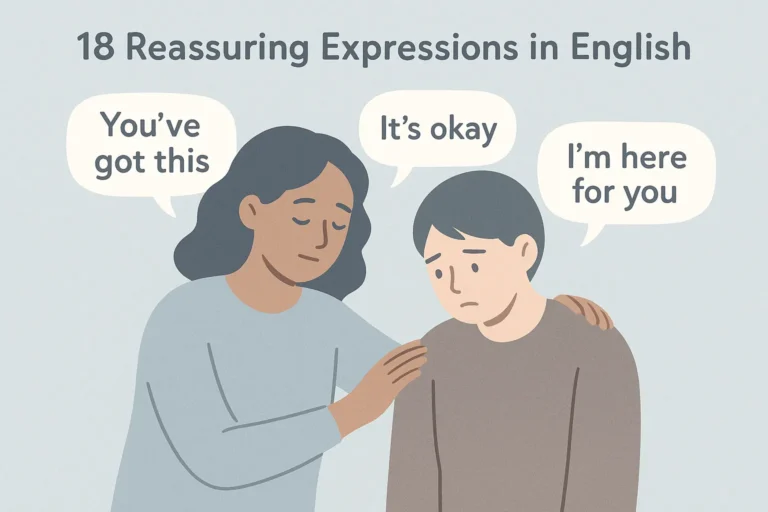
• 18 Reassuring Expressions to Comfort Someone in English

    Welcome to Hello English! Sometimes, the most powerful thing you can say isn’t advice—it’s comfort. Knowing how to reassure someone in English shows empathy, builds trust, and strengthens relationships. In this lesson, you’ll learn 18 natural reassuring expressions in English—from gentle phrases like “It’s okay” to supportive statements like “You’ve got this.” Use them to…
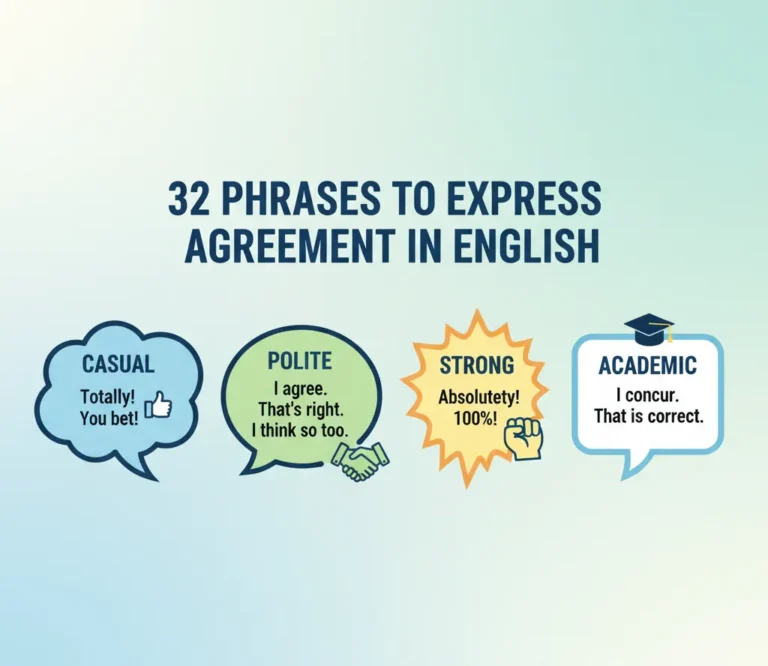
  • 32 Phrases to Express Agreement in English – From Casual to Academic

    Welcome to Hello English! Whether you’re chatting with friends, joining a meeting, or taking the TOEFL exam, knowing how to say “I agree” in English goes far beyond just saying “Yes.” In this lesson, you’ll learn 32 practical phrases to express agreement in English, grouped by context: casual, polite, strong, and academic. Use them to…

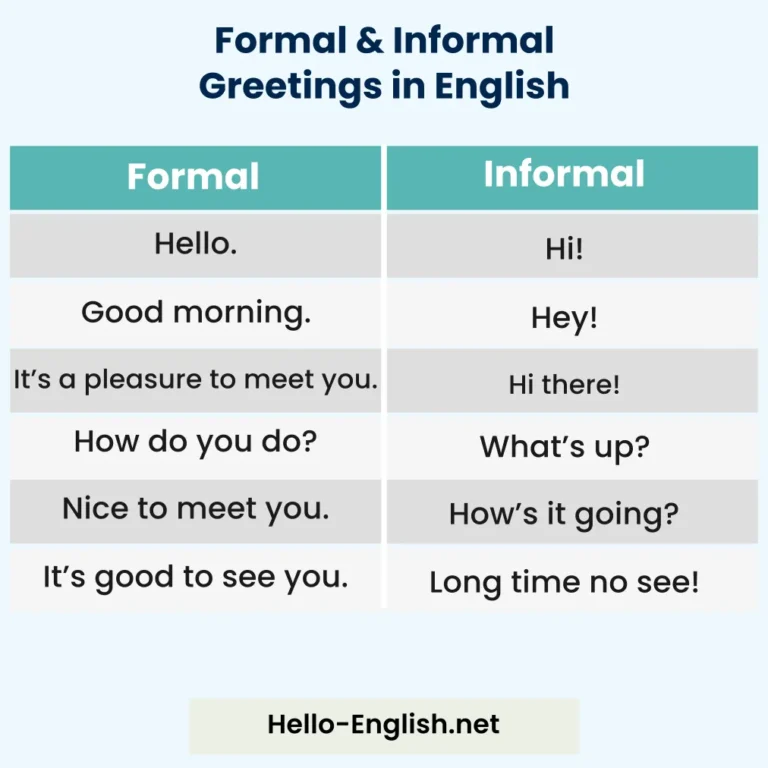
  • Formal and Informal Greetings in English – 12 Essential Phrases

    Welcome to Hello English! Greetings are more than just “hello”—they set the tone of your conversation and show respect, friendliness, or professionalism. In this lesson, you’ll learn 12 essential greetings in English—split into basic, formal, and informal categories. Whether you’re meeting a boss, texting a friend, or starting a conversation with a stranger, you’ll know exactly what to say. Basic Greetings…

  • Live Up To – Meaning and Examples

    Have you ever watched a movie that everyone said was amazing—but you thought it was just okay? Or worked hard to match your parents’ high hopes? In English, we say the movie didn’t live up to the hype, or you’re trying to live up to someone’s expectations. This everyday phrase is all about whether something…

  • Stick To – Meaning and Examples

    When you make a decision or plan, it’s important to follow it. In English, we say you need stick to your choice. This idiom is very useful for talking about commitment and consistency in daily life. What Does “Stick To” Mean? “Stick to” means to continue with something and not change it. Think of it…

  • Fade Away – Meaning and Examples

    Have you ever watched the sun dip below the horizon until daylight slowly disappears? Or noticed a song growing quieter until you can barely hear it? In English, we say it fades away. This gentle phrasal verb describes something that gradually disappears, becomes weaker, or loses attention over time—whether it’s sound, light, feelings, or even…

  • To Make Out – Meaning and Examples

    The phrase “to make out” can mean different things in different situations. You might need to see something clearly, or understand what someone is saying. This idiom is very common in casual English, but its meaning depends on the context. What Does “To Make Out” Mean? “To make out” has a few common meanings. It…

  • Die Out – Meaning and Examples

    Have you ever heard that a language is no longer spoken by young people? Or that an old tradition isn’t celebrated anymore? Maybe you’ve read about endangered animals at risk of vanishing forever. In English, we say these things are dying out. This gentle but powerful phrase describes how something slowly disappears—not all at once,…

  • Bring About – Meaning and Examples

    Have you ever seen a new law change how people live, a leader inspire a movement, or a small decision lead to big consequences? In English, we say those actions brought about the change. This formal phrasal verb means to cause something—especially a significant event, result, or transformation—to happen. What Does “Bring About” Mean? “Bring…

  • Build Up – Meaning and Examples

    Have you ever trained slowly for a race, saved money over months, or felt tension grow before a big meeting? In English, we say you’re building up to something. This useful phrasal verb describes how things grow, strengthen, or increase little by little—whether it’s muscle, trust, pressure, or excitement. What Does “Build Up” Mean? “Build…

  • To Die Down – Meaning and Examples

    Loud noises don’t last forever. Strong winds eventually become calm, and excitement slowly decreases. In English, we say these things to die down. This idiom is perfect for describing when something becomes quieter or less intense. What Does “To Die Down” Mean? “To die down” means to become gradually less strong, loud, or active. Think…

  • Stand Out – Meaning and Examples

    Have you ever walked into a room and immediately noticed someone with a unique style? Or read a resume that was so well-written it caught your attention right away? In English, we say that person or thing stands out! This useful phrasal verb describes someone or something that is noticeably different—in a good or striking…