
Expressions

Learn everyday English expressions for real conversations. Each lesson focuses on practical phrases used in daily life, work, and travel to help you sound natural and fluent.

  • 10 Ways to Ask Someone to Repeat

    Can You Say That Again? In real-life conversations, it’s totally normal not to catch everything someone says—maybe there’s background noise, an accent you’re not used to, or you were just a second behind. Knowing 10 ways to ask someone to repeat helps you stay in the conversation without feeling awkward or lost. Whether you’re chatting…

  • 10 Ways to Say “I Don’t Understand”

    Asking for clarification is one of the most important parts of any conversation. If you just say “I don’t understand” every time you get confused, you might sound impolite or frustrated. Knowing 10 Ways to Say “I Don’t Understand” allows you to be specific about your confusion and ask for help politely in different social…

  • 10 Ways to Say “I See” or “I Understand”

    In English, the simple phrases “I see” and “I understand” are great for confirming you’ve received a piece of information. However, relying on them too much can make you sound a little robotic. Learning 10 Ways to Say “I See” or “I Understand” will help you show varying degrees of comprehension, from a simple acknowledgement…

  • 10 Ways to Say “That’s True”

    When you’re having a conversation in English, showing that you agree with the other person is a vital social skill. It tells them you’re listening, you understand, and you support their point. While saying “That’s true” is perfectly fine, native speakers use many different expressions to agree, depending on the situation. Learning 10 ways to…

  • 10 Ways to Ask for an Opinion

    When you’re speaking English, asking for someone’s opinion is essential for polite conversation, productive meetings, and sharing ideas. Instead of always saying, “What do you think?” knowing 10 Ways to Ask for an Opinion will help you sound more fluent, natural, and appropriate for any situation, whether you are at work or talking with friends….

  • 12 Ways to Give an Opinion

    Learning how to share what you think is essential for real-life conversations in English. Whether you’re in a meeting, chatting with friends, or discussing a movie, you need clear and confident ways to express your point of view. This lesson will teach you 12 ways to give an opinion so you can speak fluently and…

  • 15 Phrases to Show Disagreement

    Being able to disagree politely is just as important as agreeing in English conversations. Whether you’re sharing a different opinion at work, discussing ideas with friends, or giving feedback, knowing how to say “I don’t agree” in a respectful way helps you communicate clearly—without sounding rude. Learning 15 phrases to show disagreement will give you…

  • 15 Phrases to Show Agreement

    Being able to agree with someone is a key part of everyday English conversations—whether you’re chatting with friends, joining a meeting, or sharing opinions online. Using the same phrase like “Yes” over and over can sound repetitive. That’s why learning 15 phrases to show agreement will help you sound more natural, engaged, and fluent in…

  • 10 Ways to Say “No Problem”

    When you speak English, you often want to show someone that helping them was easy or that you gladly accept a request. While “No Problem” is perfectly fine and understood everywhere, native speakers use many different expressions depending on the situation. Learning these alternatives will make your English sound more natural, confident, and fluent, whether…

  • 10 Ways to Accept an Apology

    Hello there! 👋 Learning to apologize is a key English skill, but knowing how to accept an apology is just as important! When someone says “I’m sorry,” your response matters. It shows you are graceful, ready to move on, and helps you keep a strong relationship with that person. Knowing these phrases will make you…

  • 12 Ways to Say “I’m Sorry”

    Learning how to apologize correctly is one of the most important skills in any language. In English, simply saying “I’m sorry” works, but native speakers use many different expressions depending on the situation—from bumping into someone on the street to making a serious mistake at work. Using the right phrase shows you understand the severity…

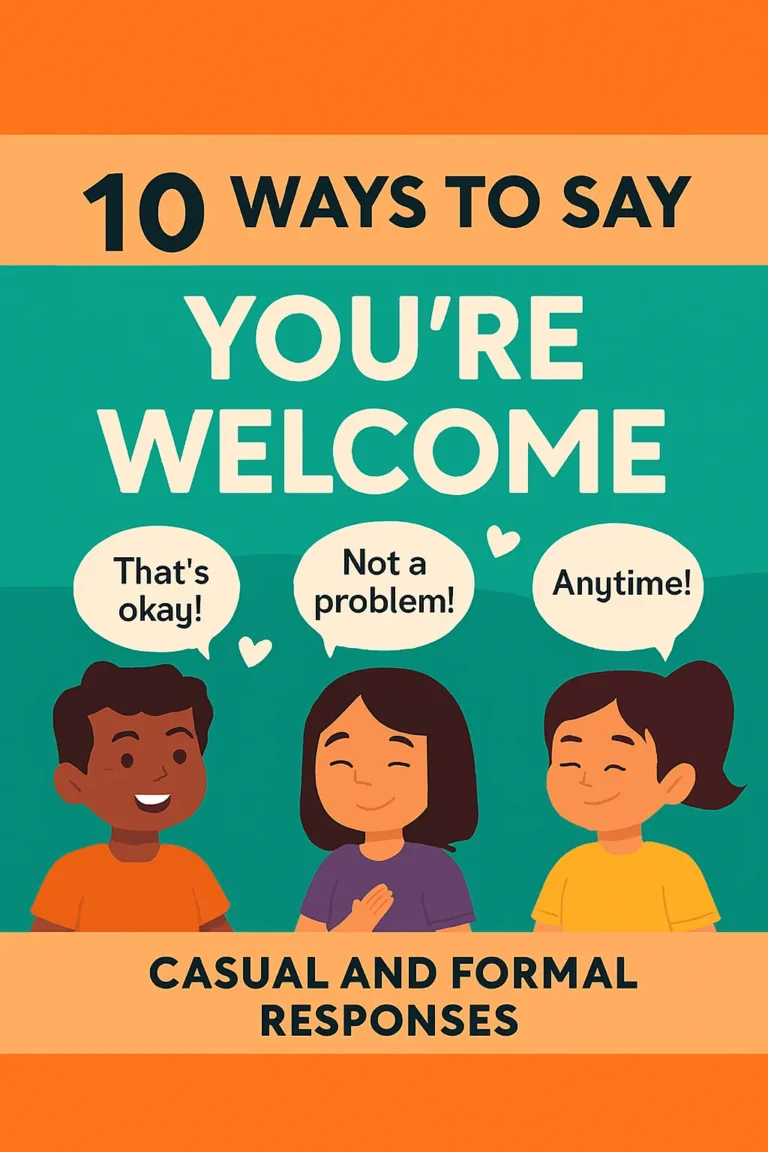
  • 10 Ways to Say “You’re Welcome”

    You’ve got a fantastic list of ways to reply to “Thank you,” but sometimes a shorter, more focused list is exactly what you need! Whether you’re texting a friend, replying to a customer, or writing a polite email, knowing how to say “You’re welcome” in different ways helps you sound natural, kind, and confident. Here…